
Introductiom
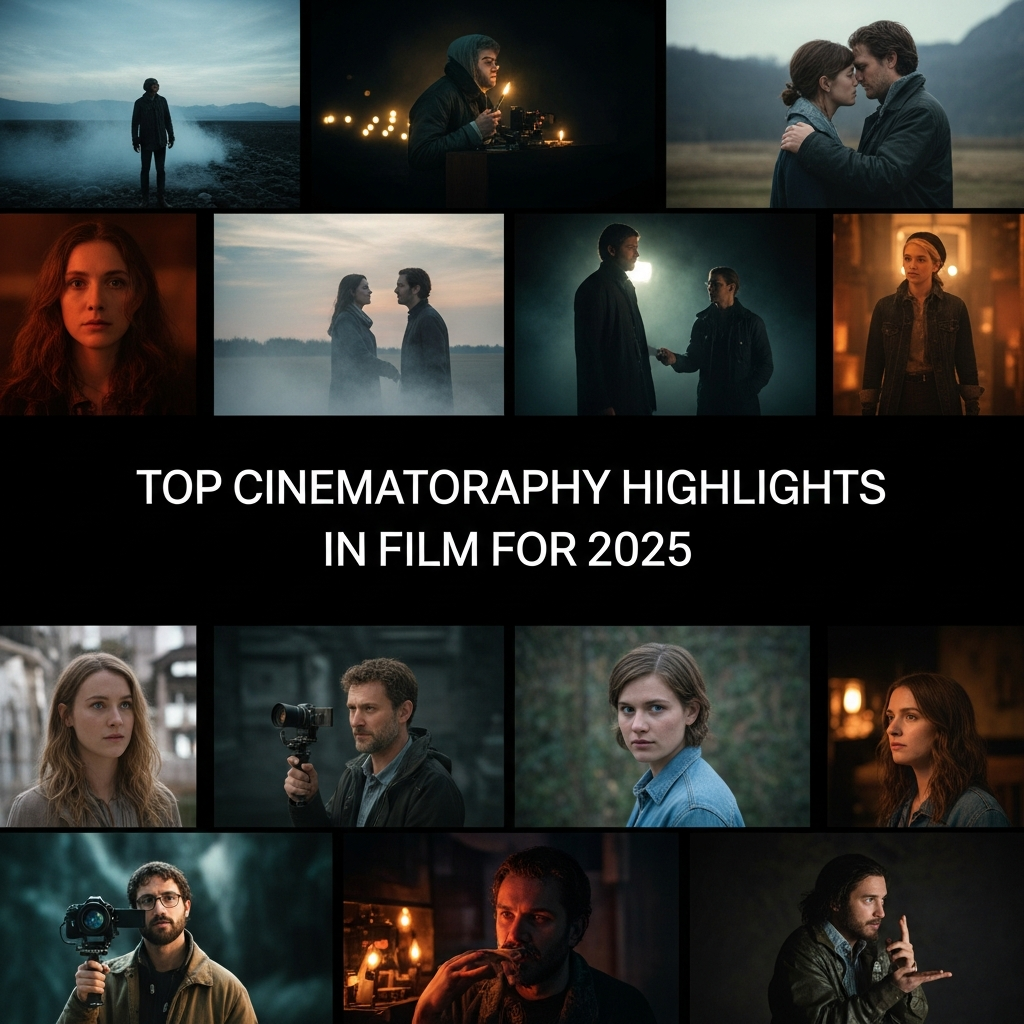
Top Cinematography Highlights in Film for 2025.
This year feels different.
Movies look more beautiful than ever.
Visual storytelling has reached a new level.
Cinematography is now a big reason people watch films.
Top Cinematography Highlights in Film for 2025.
Films are no longer just stories.
They are visual experiences.
They pull you into another world.
They make you feel things deeply.
I have watched many films this year.
Some stories were average.
But the visuals stayed in my mind.
That shows the power of cinematography.
People now notice camera work more.
They talk about lighting and framing.
They share clips online.
Visual moments go viral fast.
This blog will explore that.
We will look at trends.
We will talk about real examples.
We will also share personal insights.
What Cinematography Means Today
Cinematography is more than camera work.
It is how a story feels visually.
It controls mood and emotion.
It guides the viewer’s eyes.
A good shot can tell a story.
No dialogue is needed.
Just light, color, and movement.
In 2025, this has become stronger.
Directors trust visuals more.
They use fewer words.
They show more instead of telling.
Top Cinematography Highlights in Film for 2025 show this clearly.
Visual storytelling is now the main focus.
Trend 1: Natural Lighting Feels Real
Natural lighting is everywhere now.
Films look softer and more real.
Scenes feel like real life.
Directors avoid heavy artificial lights.
They use sunlight and shadows.
This creates authenticity.
I noticed this in many films.
Morning scenes look warm.
Evening scenes feel calm.
A simple example helps here.
A character sits near a window.
Sunlight touches their face.
No extra light is needed.
This feels honest.
It connects with the audience.
Top Cinematography Highlights in Film for 2025 include this trend.
It makes films more relatable.
Trend 2: Long Takes Are Back
Long takes are becoming popular again.
These are shots without cuts.
They last longer than usual.
They feel immersive.
They keep you inside the moment.
I remember watching a scene recently.
The camera followed a character walking.
No cuts for almost two minutes.
It felt real and intense.
Long takes require skill.
Actors must perform perfectly.
Camera operators must move smoothly.
This builds trust with the audience.
It shows confidence in storytelling.
Top Cinematography Highlights in Film for 2025 highlight this technique.
It adds depth to scenes.
Trend 3: Drone Shots Are More Creative
Drone shots are not new.
But they are used better now.
Earlier, they were just wide shots.
Now they tell stories.
Cameras move through cities.
They follow characters from above.
They show scale and emotion.
One film showed a lonely character.
The drone slowly moved away.
The city looked huge.
The character looked small.
That one shot said everything.
Top Cinematography Highlights in Film for 2025 show smarter drone use.
It is not just beauty.
It is storytelling.
Trend 4: Color Grading Creates Emotion
Colors matter a lot now.
They are not random.
Warm colors show comfort.
Cool colors show sadness.
Dark tones show tension.
I personally love this trend.
It helps me feel the story more.
For example, a breakup scene.
The colors turn blue and grey.
It feels cold and distant.
Then a happy memory appears.
The colors turn golden.
It feels warm and soft.
This contrast is powerful.
Top Cinematography Highlights in Film for 2025 use color very smartly.
It guides emotions without words.
Trend 5: Handheld Camera Feels Personal
Handheld shots are popular again.
The camera shakes slightly.
It feels real and close.
This works well in emotional scenes.
It feels like you are there.
I saw this in a family drama.
A tense argument was happening.
The camera moved slightly.
It made the scene feel raw.
It was not perfect.
But that made it powerful.
Top Cinematography Highlights in Film for 2025 use this style often.
It adds realism.
Real Example: A Film That Stands Out
Let me share a real example.
A recent film used simple visuals.
No big effects.
But the cinematography was stunning.
There was a rain scene.
A character stood alone.
Street lights reflected on water.
The camera stayed still.
Rain fell slowly.
No dialogue was needed.
You could feel the sadness.
This is what great cinematography does.
It speaks without words.
My Personal Experience
I remember watching a film alone.
The story was slow.
But the visuals were beautiful.
I did not check my phone once.
That surprised me.
Usually, slow films lose attention.
But this one kept me engaged.
Why?
Because every frame mattered.
That changed how I see movies.
Now I notice camera angles more.
I notice lighting and colors.
This is why Top Cinematography Highlights in Film for 2025 matter.
They change how we watch films.
Missing Angle: Small Budget Films Shine
Big films get attention.
But small films are doing great work too.
They use creativity instead of money.
They use natural locations.
They use simple tools.
Sometimes, these films feel more real.
I watched an indie film recently.
It had a very low budget.
But the visuals were amazing.
They used natural light only.
They used real locations.
It felt honest and fresh.
Top Cinematography Highlights in Film for 2025 are not just in big films.
Small creators are rising fast.
Missing Angle: Technology Helps Creativity
Technology is improving fast.
Cameras are lighter now.
They are also cheaper.
This helps new filmmakers.
They can experiment more.
AI tools also help editing.
Color grading is faster.
But technology alone is not enough.
Creativity still matters most.
A good idea beats expensive gear.
Why Viewers Care More Now
Audiences are smarter today.
They notice details.
Social media plays a role.
Clips are shared widely.
Beautiful shots go viral.
People discuss visuals online.
They appreciate good cinematography.
This pushes filmmakers to improve.
Top Cinematography Highlights in Film for 2025 reflect this shift.
Viewers expect more now.
Expert Opinion
From an expert view, cinematography shapes storytelling.
It is not just decoration.
It is a core part of the film.
Directors now collaborate closely with cinematographers.
They plan shots carefully.
Students at film schools increasingly pay greater attention to pictures.
They really study how to frame and light things.
This shows how important it has become.
Final Thoughts
Top Cinematography Highlights in Film for 2025.
This year proves one thing.
Visual storytelling is powerful.
Films look more real.
They feel more emotional.
They connect deeply with viewers.
From natural lighting to drone shots.
From color grading to handheld cameras.
Every technique adds value.
Even small films are shining.
Creativity is everywhere.
My personal view is simple.
Cinematography is the heart of modern cinema.
It makes stories unforgettable.
As viewers, we should notice it more.
We should value the craft.
Because there is always a beautiful shot behind
There is vision, hard work, and devotion.
Related Posts
Future Icons of the Film Industry
Chase Stokes Reveals ‘Outer Banks’ Could Wrap Up Soon: Exclusive Insights!
“Dior Goodjohn Analyzes Key Scenes from Episode 4 of Ironclad”
“Matt Rogers Discusses His Holiday Tour, Hollywood Insights, and Exciting New Podcast Plans”
Taylor Swift Shocks Eras Tour Rehearsals with Passionate Football Shout!