
Will Smith and the Giant Anaconda: A Journey Through the Amazon
The Amazon rainforest is home to some of the most incredible species on the planet, and recently, actor Will Smith found himself in the thick of it. In new footage from National Geographic’s upcoming series, Pole to Pole with Will Smith, the actor went on an extraordinary adventure that included an unforgettable encounter with a giant anaconda. This experience wasn’t just a thrill for Smith; it held essential implications for science and conservation as well.
A Giant Encounter in Ecuador
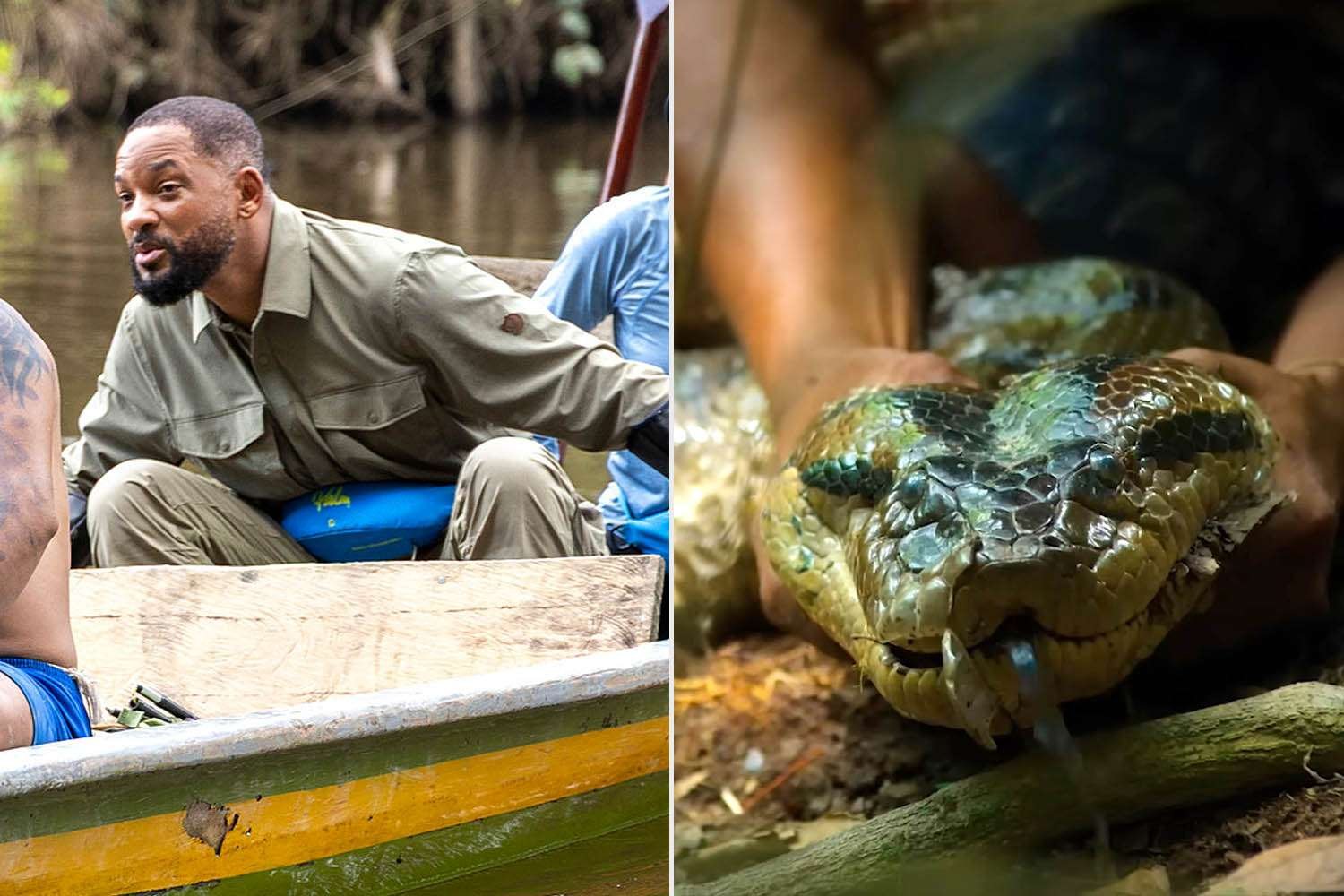
Imagine gliding down a river in Ecuador, surrounded by lush greenery, when suddenly, you spot something massive coiled on the riverbanks. A group of local Indigenous Waorani guides led by venom expert Bryan Fry, expedition leader Carla Perez, and Smith himself were on a boat when they came across this astonishing sight.
The anaconda, estimated to be around 17 feet long, was a sight to behold. “That’s gigantic. Wow!” Smith exclaimed, his eyes wide with a mixture of awe and apprehension. You can almost hear the thrill in his voice, a shared excitement that resonates with anyone who has marveled at the wonders of the natural world.
The Hands-On Experience
“It’s time to get to work,” Fry told Smith, urging him to help collar the beast. It was no small task. The local guides swiftly jumped into action, carefully approaching the anaconda to immobilize it so they could take a scale for research purposes. The energy was palpable—both exciting and intimidating.
“Let them try to control this,” Fry advised Smith as he looked on, half in disbelief and half in admiration. At that moment, the reality of what they were doing hit home. Smith remarked, “That was scary, even from the boat.” Who wouldn’t feel a rush of adrenaline in such a situation?
Once the guides successfully subdued the snake, Smith became even more engaged. He made sure to ask, in the local dialect, if it was safe to move closer, and the guides assured him it was alright. Still, a hint of apprehension lingered—how many of us would feel invulnerable near a creature like that?
A Moment of Bravery
What came next felt like a scene straight out of an action movie. Fry explained that they intended to collect a scale from the snake’s belly to study the “accumulation of pollutants in the water.” Smith was hesitant but realized the importance of their mission.
“Yeah, nah. I’m a little nervous,” he admitted, showcasing a vulnerability that humanizes this larger-than-life actor. But Fry was patient and encouraging, boosting Smith’s confidence. “You can do it,” he said with an air of reassurance.
As the guides lifted the snake’s belly, Smith took a deep breath and wiped away any mud or debris. With scissors in hand, Fry made a clean cut, collecting the precious sample. “There you go. There’s our sample. We can do all the research on this animal with just that one tiny little piece,” he explained, and Smith’s relief was evident. “That’s fantastic,” he said, visibly thrilled.
A Scientific Breakthrough
The message from this encounter stretches far beyond mere excitement. The scale collected turned out to be a vital piece of the puzzle. Researchers discovered that the northern and southern green anacondas, long thought to be the same species, are actually genetically distinct. This was groundbreaking!
Fry shared that their divergence occurred nearly 10 million years ago, and the genetic difference between the two is about 5.5%. For context, humans differ from chimpanzees by roughly just 2%. This revelation not only deepens our understanding of anacondas but also underscores the complexity of biodiversity in our world.
What’s in a Name?
The findings point out significant distinctions in habitat and size as well. The northern green anaconda tends to reach larger proportions and is confined to a smaller geographic range compared to its southern counterpart. This knowledge is crucial for conservation efforts as it helps scientists understand how to protect these species and their environments effectively.
Green anacondas are non-venomous and belong to the boa family, often boasting the title of the heaviest snakes in the world. They typically live up to 10 years in the wild, navigating the delicate ecosystems of South America. Understanding their behavior and genetics not only aids scientists but also raises awareness about the fragility of their habitats.
The Broader Implications
So why does this matter? The adventure of Will Smith and the anaconda serves as a metaphor for how crucial every species is to our ecosystem. It’s easy to overlook the delicate balance of nature, but experiences like Smith’s bring to light the importance of scientific research that seeks to protect it.
Imagine a world without the richness of biodiversity—the loss of species would be like tearing pages from a story. Each one contributes to the plot of life itself. The revelations from this expedition aren’t just academic; they echo in conservation efforts, tourism, and local economies reliant on the health of their ecosystems.
Connecting the Dots
Will Smith’s on-screen journey in Pole to Pole is going to hit Disney+ on January 13. This isn’t just another celebrity travel show; it highlights the intimate connections between people and wildlife. It encourages viewers to think about our responsibility to protect our planet—and its inhabitants.
Much like Smith’s conversation with local guides revealed the knowledge they hold about their environment, it reflects how interconnected we all are. What does this mean for everyday people? It’s a reminder that each of us has the power to advocate for our natural world.
A Takeaway
As I reflect on this remarkable adventure, I can’t help but think about the significance of what we witnessed. The experience of Will Smith with the anaconda isn’t merely entertainment or sensationalism; it’s a compelling story of discovery, fear, and ultimately, respect for nature.
In our rapidly changing world, it’s vital to engage with nature, to understand its complexities, and to protect its wonders. Will Smith’s journey may just inspire us to step out of our comfort zones, just like he did, and take action—whether that means making more eco-friendly choices, supporting conservation organizations, or simply spreading awareness.
In the end, every step toward understanding and preserving our planet is a step in the right direction, reminding us that we are all players in this grand story of life.